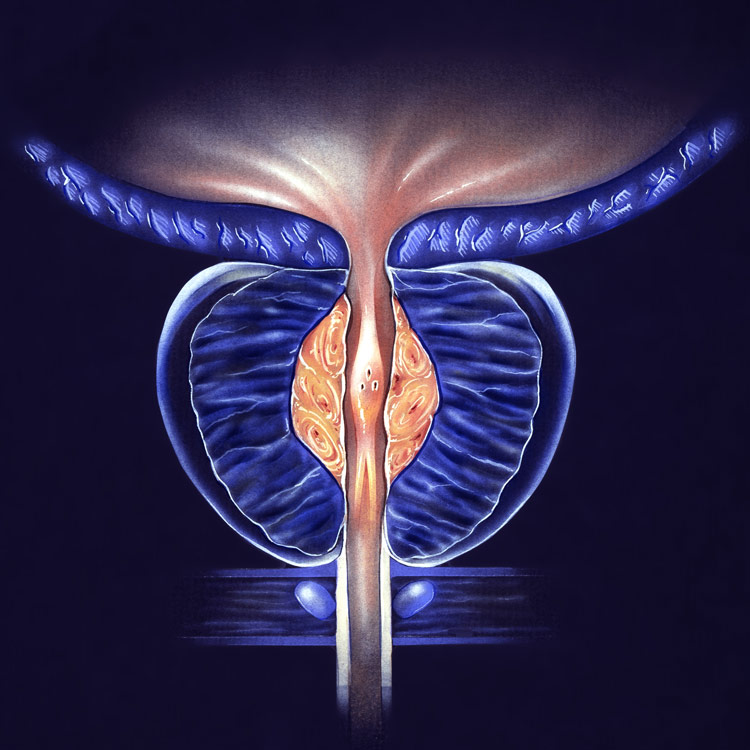
All About Prostate Cancer
Key Facts

Prostate cancer is now the most common cancer in men
(not including certain types of skin cancer).

Currently 1 in 8 men in the UK will develop prostate cancer and those with a family history or black ethnicity are at even greater risk of the disease

More than 50,000 men are diagnosed with prostate cancer in the UK each year and over 12,000 men sadly die from the disease

Out of every 100 cancers diagnosed in men, 24 are prostate cancers
However, as is the case with many cancers, if prostate cancer is found early enough, the chances of removing or killing the cancer cells completely are good. In addition, if the cancer is localised, which means that it has not spread outside the prostate gland, then the number of available treatment options increases. One of these treatment options is the treatment called prostate brachytherapy.
Prostate brachytherapy is a proven effective treatment for early localised prostate cancer. It is a single day-case procedure with the same chance of successful treatment as radical surgery but with a lower rate of incontinence and impotence.

In this section you can find out more about prostate cancer, its symptoms, diagnosis and treatment. There is also information about the stages and grades of prostate cancer which play a large part in deciding which treatment is most suitable for you.
What is the prostate gland?
A valve mechanism, or sphincter, maintains continence and stops urine leaking out of the bladder. The sphincter is located immediately below the prostate gland.
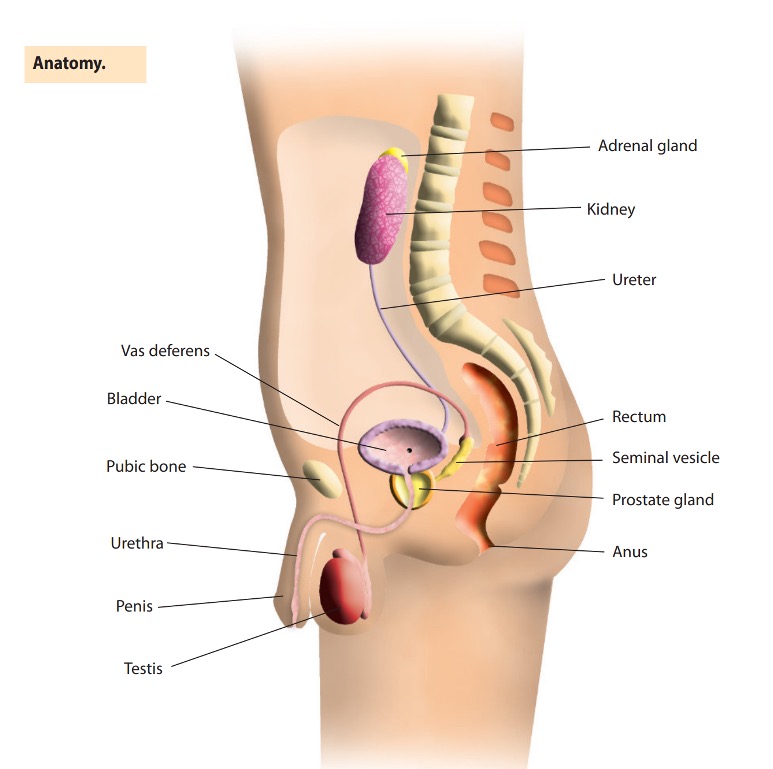
The prostate gland is part of the male reproductive system. It develops at puberty and then continues to enlarge after the age of 40. Women do not have a prostate gland and therefore cannot get prostate cancer.
The prostate gland acts rather like a junction box. It allows the tubes that carry sperm from each testicle, and the tubes that drain from the seminal vesicles to meet and then empty their contents in to the urethra. (The seminal vesicles consist of two pouches that provide nutrients for the sperm and lie immediately behind the prostate).
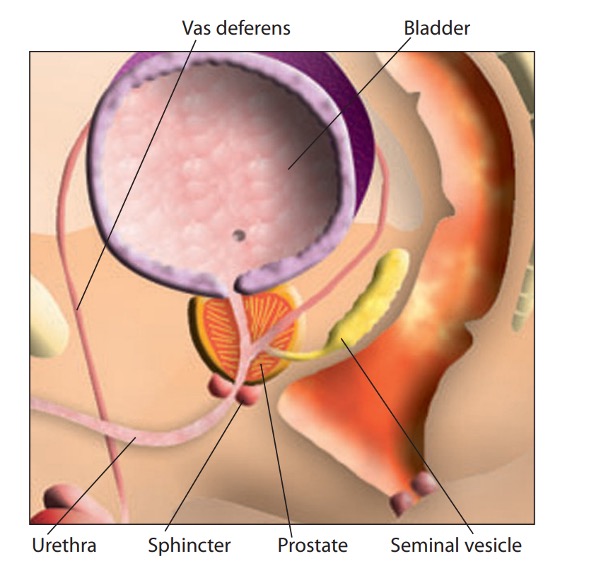
At the point of orgasm sperm, seminal vesicle fluid and prostatic secretions enter the urethra and mix together forming semen. This is then ejaculated out through the penis by rhythmic muscular contractions.
What controls the growth of the prostate gland?
The growth of the prostate is controlled by testosterone, the male sex hormone. Most testosterone is made by the testicles, although a small amount is also made by the adrenal glands, which lie on top of each kidney. The hormone goes into the bloodstream and finds its way to the prostate. Here, it is changed into dihydro-testosterone (DHT), a more active form which stimulates growth of the gland. The prostate gradually enlarges with ageing, resulting in symptoms such as reduced urine flow and a feeling of incomplete emptying of the bladder, having passed urine. This enlargement is usually benign (non-cancerous).