All About Prostate Cancer
What is prostate cancer?
Cancer Cells
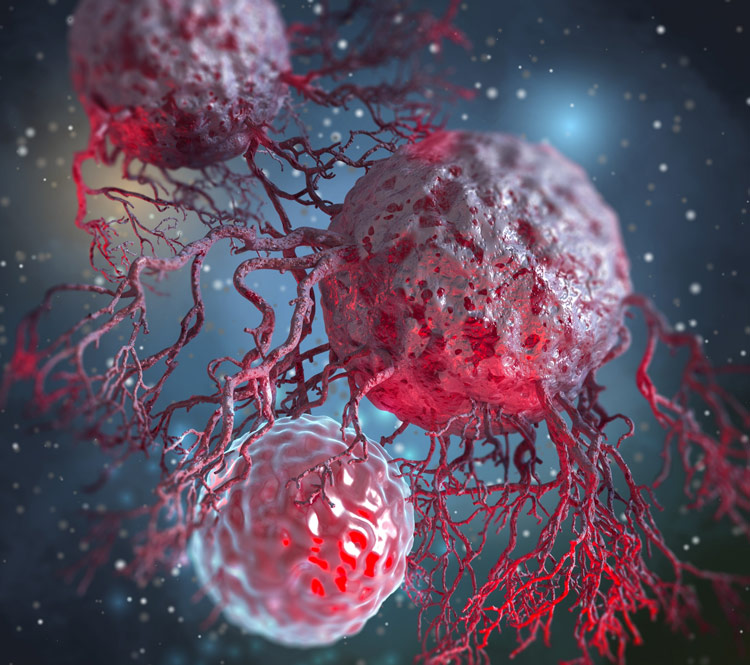
Normally in the prostate, as in the rest of the body, there is a continuous turnover of cells, with new cells replacing old dying ones. In a cancer, the balance between the new and old cells is lost, with many more new cells being made and older ones living longer, as the process of planned cell death has been disrupted.
These malignant growths are known as prostate cancer. They differ from benign enlargements in that the cancerous cells can spread (metastasise) to other areas in the body. However, sometimes the cancer can be detected before it has spread outside the prostate gland, when it is at an early stage.
Cancer cells can spread by directly growing outwards through the capsule (outer covering of the gland) into the neighbouring parts of the body, such as the seminal vesicles or bladder. They may occasionally spread through the bloodstream and implant and grow in the bones of the spine. Finally, cells can spread through lymph vessels. These vessels are like a second system of veins, except that, instead of blood, they contain a milky fluid that is made up of the cells’ waste products. Lymph vessels drain via lymph nodes (special bean-shaped filters) to finally empty back into the blood circulation. During this process the lymph nodes can also be invaded by cancer cells.
How common is prostate cancer?

Prostate cancer is now the most common cancer in men in the UK, with over 52,000 men being diagnosed with the disease and more than 12,000 men dying from it each year (Cancer research UK 2016-2019). However, there have been many recent advances in detecting and treating prostate cancer and patients who are diagnosed early can now have a high chance of their treatment successfully eradicating the cancer.
Prostate cancer less commonly occurs before 50 years of age and is most commonly diagnosed in men in their 60s and 70s. Its incidence is increasing and now more men in the UK will die of prostate cancer than women from breast cancer. Currently men in the UK have a 1 in 8 risk of getting prostate cancer and this risk increases with a family history of the disease or black ethnicity.
Why does prostate cancer occur?
The real answer to this question is not known. Nevertheless, there are a number of factors that can increase the chance of developing prostate cancer. Relatives of patients with prostate cancer have an increased risk of developing the disease themselves, especially if their father or brother were affected. The disease is more common in black men (1 in 4 black men will develop prostate cancer in their lifetime) and rarer in Chinese populations. There also appears to be a link with people living in urban areas exposed to pollution and those consuming large quantities of processed foods and dietary fat.

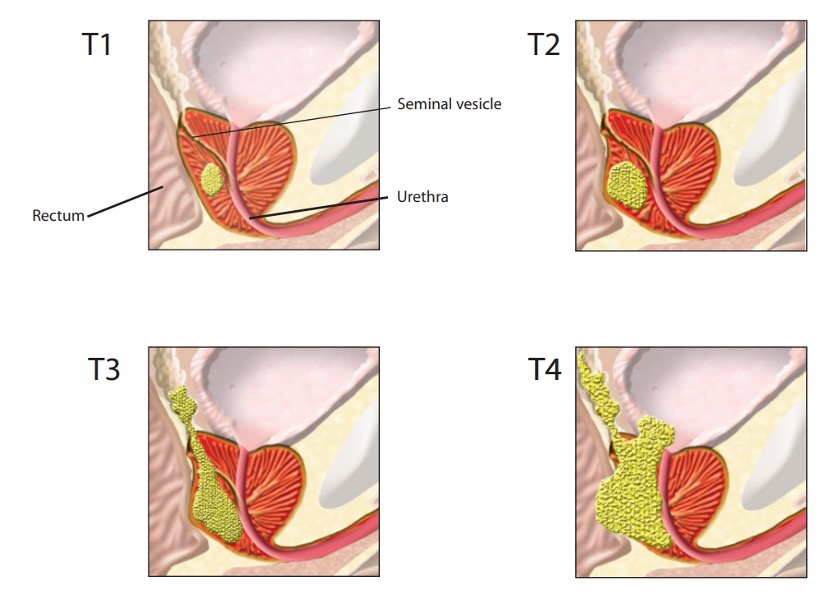
Stages of prostate cancer
Earliest stage, where the cancer is so small that it cannot be felt on rectal examination or seen on MRI scan, but is discovered in a prostate biopsy or in prostate tissue that has been surgically removed to ‘unblock’ the flow of urine (as in a transurethral resection of the prostate – TURP).
The cancer can now be felt on rectal examination or seen in MRI, but is still confined to the prostate gland and has not spread.
The cancer is seen on the MRI to have spread outside the capsule of the prostate gland (T3a) and may have invaded the seminar vesicles (T3b).
The cancer has spread to involve surrounding tissues such as the rectum, bladder or muscles of the pelvis.